What to Watch for When Buying a Used Grader (Motor Grader)?
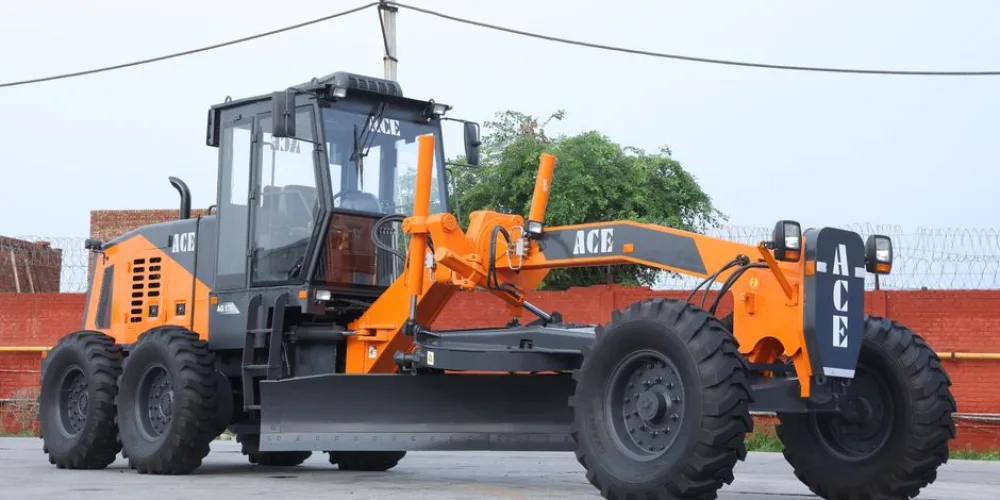
Blade system, circle gear, articulation and transmission: what determines precision in a grader.
Short answer: On a grader, work quality comes from the blade control system: circle gear play, blade shift/tilt cylinders and play in the articulation joint directly affect fine grading. A grader with play cannot deliver a "smooth surface." The transmission (usually powershift) and tandem axle maintenance are the second heavy item.
This guide answers: How is the blade system tested? · How is circle-gear wear spotted? · How much horsepower is needed? · Is a ripper required?
- Circle-gear play directly determines a grader's grading precision
- Blade cylinders and guide plates are expensive wear items
- Articulation play spoils straight-line running — a road test is essential
- Powershift knocking foretells a transmission overhaul
Blade and circle system
Move the blade on all axes: shift, rotate, tilt. Play in the circle gear and wear on the guide plates spoil grading precision; these parts are expensive.
Articulation and steering
Play in the center joint causes snaking; delay in the steering hydraulics is checked.
Transmission and tandem
Knocking on powershift changes is a sign of overhaul; tandem-axle oil leaks and chain noise are checked.
Frequently asked questions
How much horsepower is needed? A mid-class is enough for road maintenance; heavy fill and long distances need a more powerful model.
Is a ripper essential? On hard ground and removing old pavement, a rear ripper makes the job easier.
For the current price range: valuation tool · listings for sale · cost calculators
Last updated: 07.07.2026 · Based on field practice and platform data; it does not replace a technical inspection.
Comments
No comments yet. Be the first to comment.
Write a Comment
Related Guides
Posting is free — buyer messages come straight to you, no commission.
Post a free listing Why sell here?